



What NOT to Say to an Insurance Adjuster After an Accident
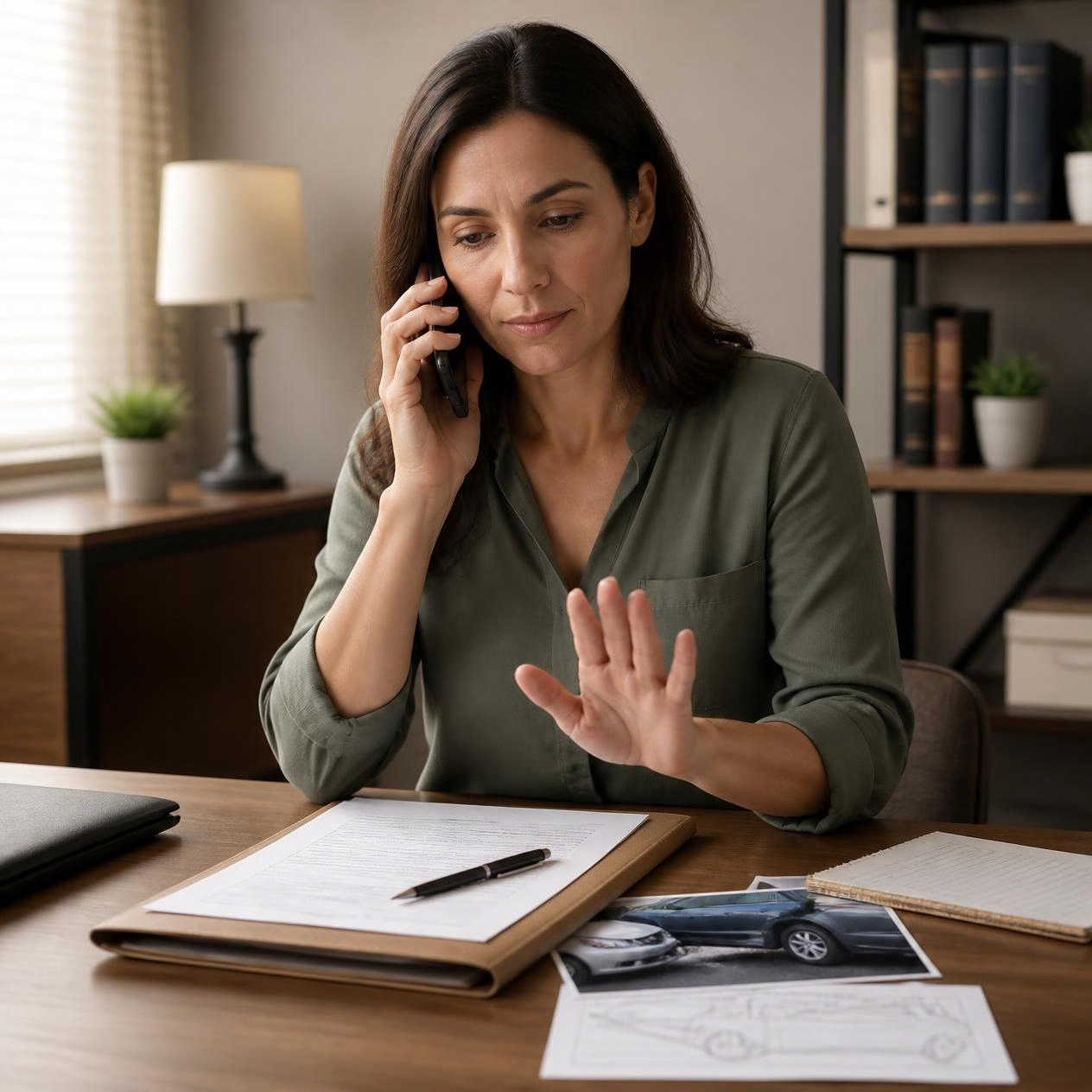
The insurance adjuster who calls after your accident sounds friendly and helpful, and that’s exactly the point. Their job is to resolve your claim for as little as possible, and a casual, well-meaning phone call is one of the easiest ways for that to happen. Here’s what to watch for.
“I’m fine” or “I don’t think I’m hurt”
Adrenaline and shock can mask injuries for hours or even days after an accident. Saying you’re fine on a recorded call, even in passing, can later be used to argue your injuries weren’t caused by the accident, or weren’t serious to begin with.
Apologizing, Even Out of Habit
“I’m sorry” is something most people say reflexively, even when they’ve done nothing wrong. In an insurance context, it can be framed as an admission of fault, regardless of what you actually meant by it.
Guessing at Speed, Distance, or Timing
Adjusters often ask specific, detailed questions, how fast were you going, how far away was the other car, exactly how many seconds passed. Guessing to fill an awkward silence can create inconsistencies that are later used to question your credibility.
Agreeing to a Recorded Statement Right Away
You’re generally not required to give a recorded statement to the other driver’s insurance company, and you’re not required to do it immediately. Taking time to consult with an attorney first costs you nothing and can prevent an offhand comment from limiting your claim.
Why the Adjuster Calls So Quickly
It’s not a coincidence that the call often comes within a day or two of the accident, sometimes before you’ve even seen a doctor. Adjusters know that the sooner they reach you, the less time you’ve had to process what happened, document your injuries, or speak with an attorney, which makes an off-the-cuff, undocumented statement far more likely. A friendly tone on that call doesn’t change what its purpose is.
What to Say Instead
- Stick to basic facts: date, location, and that you were involved in an accident
- Say you’re still being evaluated by a doctor rather than confirming you’re “fine”
- Avoid speculating on fault, speed, or distance if you’re not certain
- It’s reasonable to say you’d like to speak with an attorney before providing a recorded statement
None of this is about being uncooperative, it’s about not letting an informal phone call undo weeks of medical treatment and documentation. A few careful words at the right moment can make a real difference in what your claim is ultimately worth.
“I’m fine” or “I don’t think I’m hurt”
Adrenaline and shock can mask injuries for hours or even days after an accident. Saying you’re fine on a recorded call, even in passing, can later be used to argue your injuries weren’t caused by the accident, or weren’t serious to begin with.
Apologizing, Even Out of Habit
“I’m sorry” is something most people say reflexively, even when they’ve done nothing wrong. In an insurance context, it can be framed as an admission of fault, regardless of what you actually meant by it.
Guessing at Speed, Distance, or Timing
Adjusters often ask specific, detailed questions, how fast were you going, how far away was the other car, exactly how many seconds passed. Guessing to fill an awkward silence can create inconsistencies that are later used to question your credibility.
Agreeing to a Recorded Statement Right Away
You’re generally not required to give a recorded statement to the other driver’s insurance company, and you’re not required to do it immediately. Taking time to consult with an attorney first costs you nothing and can prevent an offhand comment from limiting your claim.
Why the Adjuster Calls So Quickly
It’s not a coincidence that the call often comes within a day or two of the accident, sometimes before you’ve even seen a doctor. Adjusters know that the sooner they reach you, the less time you’ve had to process what happened, document your injuries, or speak with an attorney, which makes an off-the-cuff, undocumented statement far more likely. A friendly tone on that call doesn’t change what its purpose is.
What to Say Instead
- Stick to basic facts: date, location, and that you were involved in an accident
- Say you’re still being evaluated by a doctor rather than confirming you’re “fine”
- Avoid speculating on fault, speed, or distance if you’re not certain
- It’s reasonable to say you’d like to speak with an attorney before providing a recorded statement
The insurance adjuster who calls after your accident sounds friendly and helpful, and that’s exactly the point. Their job is to resolve your claim for as little as possible, and a casual, well-meaning phone call is one of the easiest ways for that to happen. Here’s what to watch for.
“I’m fine” or “I don’t think I’m hurt”
Adrenaline and shock can mask injuries for hours or even days after an accident. Saying you’re fine on a recorded call, even in passing, can later be used to argue your injuries weren’t caused by the accident, or weren’t serious to begin with.
Apologizing, Even Out of Habit
“I’m sorry” is something most people say reflexively, even when they’ve done nothing wrong. In an insurance context, it can be framed as an admission of fault, regardless of what you actually meant by it.
Guessing at Speed, Distance, or Timing
Adjusters often ask specific, detailed questions, how fast were you going, how far away was the other car, exactly how many seconds passed. Guessing to fill an awkward silence can create inconsistencies that are later used to question your credibility.
Agreeing to a Recorded Statement Right Away
You’re generally not required to give a recorded statement to the other driver’s insurance company, and you’re not required to do it immediately. Taking time to consult with an attorney first costs you nothing and can prevent an offhand comment from limiting your claim.
Why the Adjuster Calls So Quickly
It’s not a coincidence that the call often comes within a day or two of the accident, sometimes before you’ve even seen a doctor. Adjusters know that the sooner they reach you, the less time you’ve had to process what happened, document your injuries, or speak with an attorney, which makes an off-the-cuff, undocumented statement far more likely. A friendly tone on that call doesn’t change what its purpose is.
What to Say Instead
- Stick to basic facts: date, location, and that you were involved in an accident
- Say you’re still being evaluated by a doctor rather than confirming you’re “fine”
- Avoid speculating on fault, speed, or distance if you’re not certain
- It’s reasonable to say you’d like to speak with an attorney before providing a recorded statement
None of this is about being uncooperative, it’s about not letting an informal phone call undo weeks of medical treatment and documentation. A few careful words at the right moment can make a real difference in what your claim is ultimately worth.
Contact LAW OFFICES OF SHEENA RUDE today to schedule a free consultation: (818) 658-3700 | (408) 317-2550 | (858) 247-2724