



Does a Pre-Existing Injury Ruin Your Personal Injury Claim? The Eggshell Skull Rule
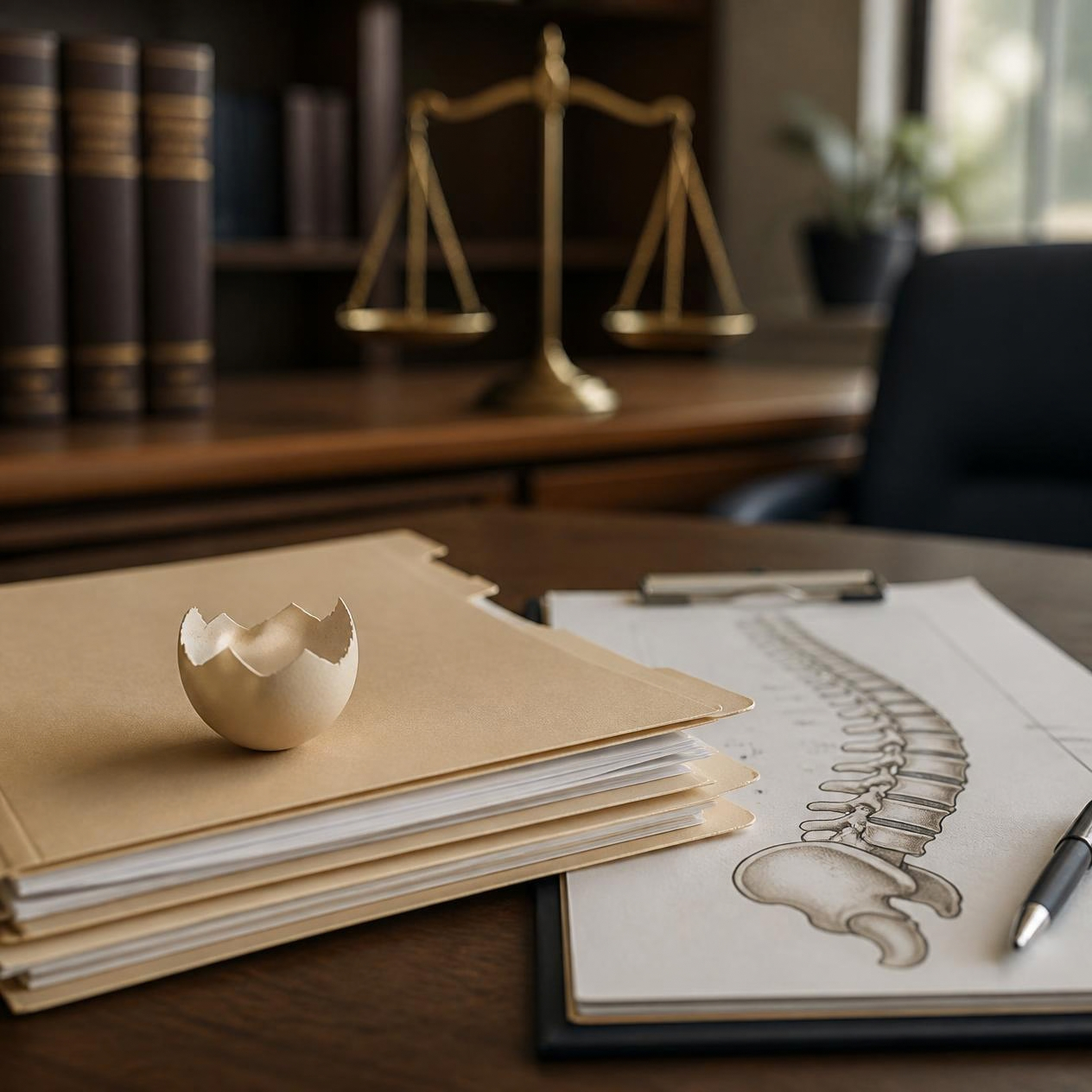
One of the first things insurance companies do when they learn about a prior injury is use it to argue your current claim isn’t worth much. California law actually says the opposite is true, and the doctrine that protects you has an unusual name: the eggshell skull rule.
What the Eggshell Skull Rule Actually Says
The rule holds that a defendant “takes the plaintiff as they find them.” In practice, that means an at-fault party is fully responsible for the harm they cause, even if a person with a pre-existing condition or vulnerability ends up more seriously injured than an average, healthy person would have been in the same accident. Having a fragile pre-existing condition isn’t a discount on the defendant’s liability, the eggshell skull rule exists specifically to prevent that argument.
Why Insurers Push Back Anyway
- Arguing the current pain and limitations are really just the old injury, not new harm from this accident
- Requesting years of prior medical records to look for any prior complaint involving the same body part
- Claiming the accident only caused a minor, temporary aggravation rather than lasting harm
The Key Legal Distinction: Aggravation vs. New Injury
You don’t have to prove the accident created an entirely new condition from scratch. You’re entitled to compensation for the aggravation — the worsening of a pre-existing condition caused by the new accident — even if some baseline symptoms existed before. The challenge is proving the difference between your baseline condition before the accident and your condition afterward.
How to Protect a Claim With a Pre-Existing Condition
- Be upfront about prior injuries with your attorney and your treating doctors from the start, rather than letting the insurer discover it first
- Gather medical records showing your condition and functional level before the accident, for comparison
- Make sure post-accident medical records clearly describe how symptoms changed, worsened, or became more limiting after the incident
- Avoid assuming a prior injury disqualifies you from a claim — in most cases, it simply changes what needs to be documented
A Simple Example
Imagine someone with an old, largely manageable back injury from years earlier who is then rear-ended and afterward experiences significant new pain, reduced mobility, and needs physical therapy they hadn’t required in years. Under the eggshell skull rule, the at-fault driver is responsible for that real, documented worsening of the condition, not just for injuries that would have occurred in someone with no prior back issues. The insurer may still argue the change was minor or unrelated, which is exactly why clear before-and-after medical documentation matters so much in these cases.
A pre-existing condition is one of the most common tactics insurers use to devalue a claim, but it’s rarely a valid reason to deny one. With the right documentation, aggravation of an old injury is compensable under California law just like any other harm.
Contact LAW OFFICES OF SHEENA RUDE today to schedule a free consultation: (818) 658-3700 | (408) 317-2550 | (858) 247-2724