



Who Is At Fault in a Rear-End Collision in California?
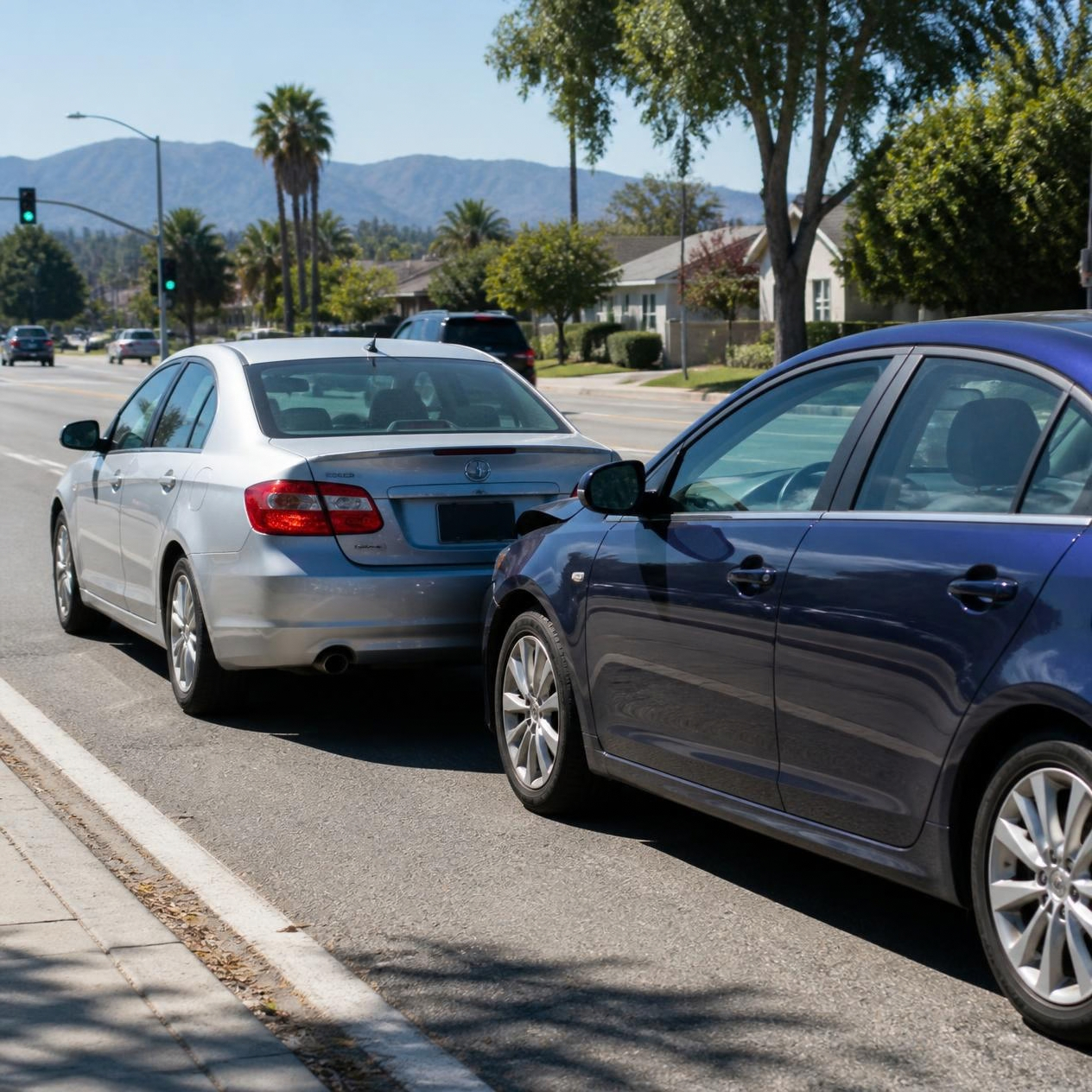
Rear-end collisions are one of the most common types of car accidents in California, and most people assume the driver in back is always to blame. That’s usually true, but not automatically, and not in every situation. Here’s how fault actually gets determined.
The General Rule: Following Too Closely
California law requires drivers to maintain a safe following distance, and in most rear-end collisions, the trailing driver is presumed negligent for failing to do so. Insurance companies default to this assumption too, which is why rear-end claims are often easier to resolve than other types of accidents.
When the Front Driver Can Share or Bear Fault
This presumption can be challenged. If the front driver suddenly reversed, stopped abruptly without reason, had broken brake lights, or cut sharply into the lane right before stopping, some fault may shift to them. California is a comparative negligence state, meaning fault and compensation can be split by percentage between both drivers based on the specific facts.
Multi-Car Pile-Ups Complicate Things
When three or more vehicles are involved, fault often isn’t limited to the driver who hit you. Each impact needs to be traced individually the car that struck you may have only been pushed into you by the vehicle behind it. Untangling a chain-reaction crash usually requires a careful look at damage patterns, witness accounts, and sometimes accident reconstruction.
How Fault Actually Gets Proven
Insurance adjusters don’t just take your word for it, and neither does a court. Fault in a rear-end case is typically established through a combination of the police report, damage patterns on both vehicles (which can indicate speed and point of impact), any available dashcam or nearby surveillance footage, and witness statements taken close to the time of the accident. Increasingly, newer vehicles also store event data — sometimes called “black box” data — that can show speed and braking in the seconds before impact, which can be decisive in a disputed claim.
What This Means for Your Claim
- Don’t assume the insurance company will automatically pay full value just because you were rear-ended
- Document the scene, including brake lights, road conditions, and vehicle positions
- Get a police report and any available witness contact information
- Be cautious about giving a recorded statement before speaking with an attorney, especially in a multi-car accident
Even in a seemingly straightforward rear-end accident, insurers look for any opening to reduce a payout. Understanding how fault is actually assigned helps you protect the full value of your claim from the start.
Contact LAW OFFICES OF SHEENA RUDE today to schedule a free consultation: (818) 658-3700 | (408) 317-2550 | (858) 247-2724